
 Arizona Cardinals
 Atlanta Falcons
 Carolina Panthers
 Chicago Bears
 Dallas Cowboys
 Detroit Lions
 Green Bay Packers
 Los Angeles Rams
 Minnesota Vikings
 New Orleans Saints
 New York Giants
 Philadelphia Eagles
 San Francisco 49ers
 Seattle Seahawks
 Tampa Bay Buccaneers
 Washington Commanders
 Baltimore Ravens
 Buffalo Bills
 Cincinnati Bengals
 Cleveland Browns
 Denver Broncos
 Houston Texans
 Indianapolis Colts
 Jacksonville Jaguars
 Kansas City Chiefs
 Las Vegas Raiders
 Los Angeles Chargers
 Miami Dolphins
 New England Patriots
 New York Jets
 Pittsburgh Steelers
 Tennessee Titans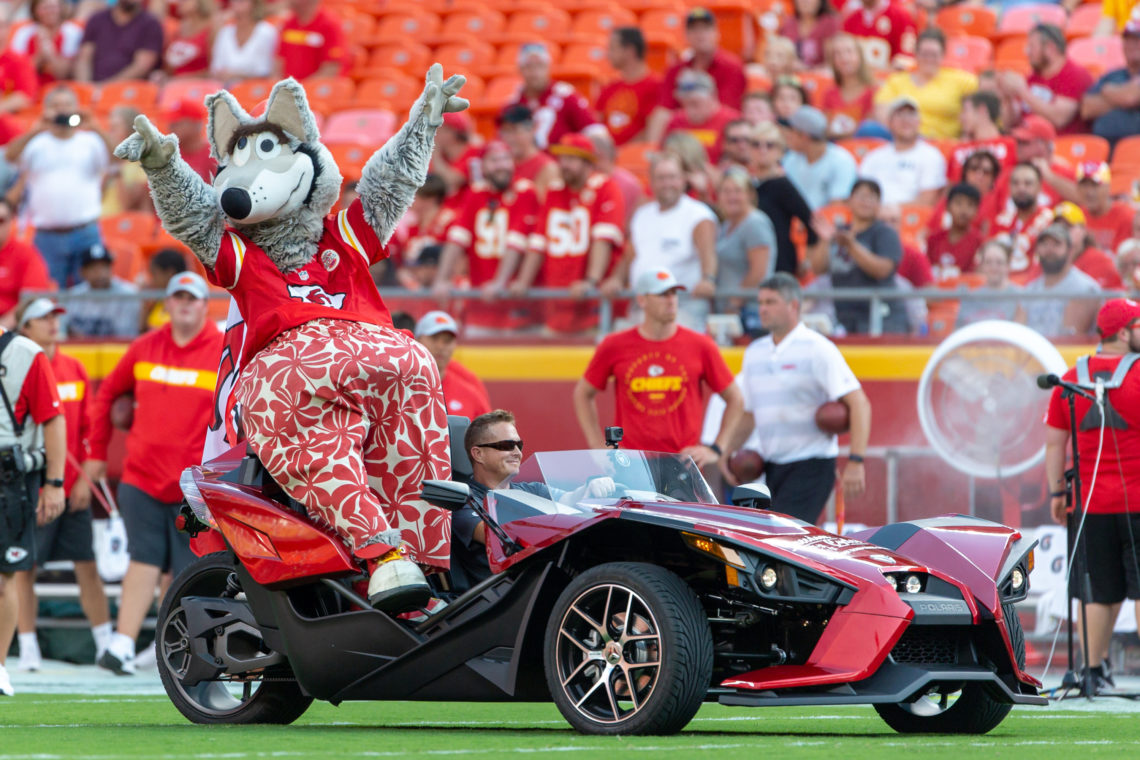


The Kansas City Chiefs mascot is a wolf – but wolves aren’t native to the state of Missouri where they are based. How did the animal come to be the mascot for the Chiefs?
Some NFL mascots are easily identifiable thanks to their closeness to the team they represent. For example, the Atlanta Falcons have a Falcon, the Buffalo Bills, a buffalo.
However, the Kansas City Chiefs have a wolf representing them on game days. KC Wolf is a familiar sight at the goalposts and around the stadium for spectators and fans at home.
But why is a wolf the mascot for the Chiefs, when the animal is not native, and sightings have been rare in the mid-west? Let’s take a look.

Chiefs wolf mascot explored
KC Wolf is the current Chiefs mascot – replacing the previous one in 1989. Previously it was Warpaint – a horse ridden by a person in Native American clothing.
This was deemed offensive to the Native American community and therefore discontinued. In addition, having a live animal in a loud, unfamiliar environment was probably not the best idea.
Team bosses decided upon a change to the Chiefs mascot – settling upon KC Wolf.
The mascot can usually be found wearing Chiefs gear and gearing the crowd up at key moments.
So why a wolf?
It’s pretty simple: There was an area behind the team bench area known as the ‘Wolfpack.’ The more vocal sections of the fanbase would occupy it – and so the Chiefs decided to take inspiration from the ‘Wolfpack’ and make a wolf their mascot.
KC Wolf is usually played by Dan Meers – whose been at it since the start. Meers has been the person behind the mascot for various other teams.
He started out at the University of Missouri as Truman Tiger, before moving onto baseball.
A stint as St Louis Cardinals mascot ‘Firebrand’ ended when he decided to move to Kansas and put on the wolf suit.